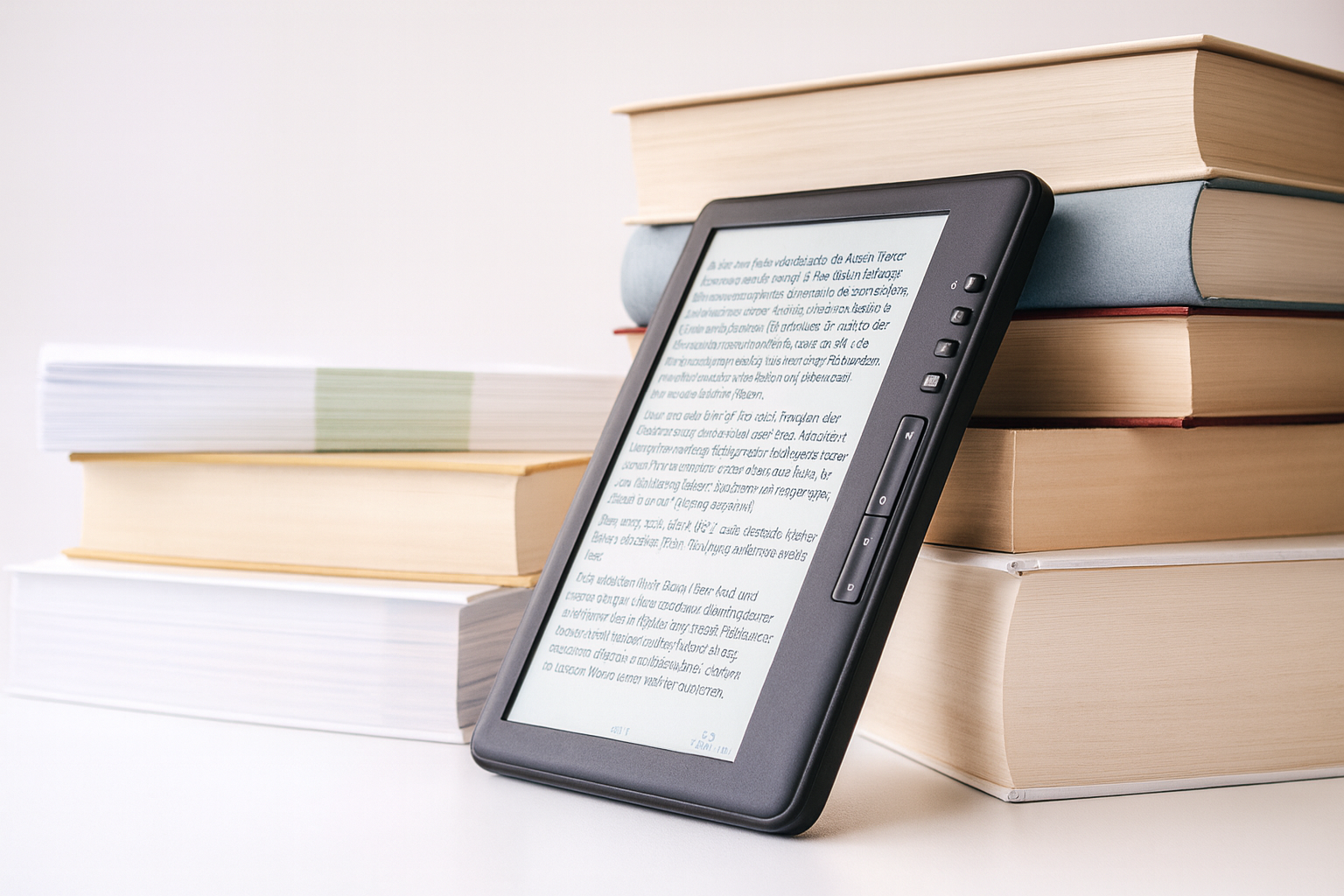
If you have ever noticed that readers describe your print book as “immersive” while flying through the ebook version in days, you are already encountering the real effects of paper vs. screen reading. For authors, this debate is not academic. It directly shapes how readers focus, remember, feel, and emotionally bond with your story.
As new research continues to emerge, it is increasingly clear that reading format changes the cognitive and emotional experience of narrative. That means the format you publish in can subtly influence pacing perception, emotional resonance, memory retention, and even reread behavior.
This article breaks down the latest science behind paper vs. screen reading through a single author centered question:
📚 Does the format readers choose change how they experience your story?
Understanding the answer helps you write more intentionally, structure scenes more strategically, and make smarter publishing choices across print and digital.
Why Paper vs. Screen Reading Matters for Authors
Digital reading has exploded over the last fifteen years, yet print remains dominant. According to Statista, more than 75% of global book revenue still comes from print formats, even as ebook adoption continues to grow steadily.
For authors, this is not simply a market statistic. It reflects how deeply format influences reader behavior.
Digital reading has changed how readers skim, annotate, abandon chapters, highlight passages, and emotionally react to story beats. Meanwhile print reading continues to shape how readers slow down, reread, and emotionally internalize narrative moments.
As we explored in an earlier WriteStats analysis on reading app data collection, digital reading also introduces a layer of data tracking that affects discoverability, recommendation algorithms, and long term reader behavior:
What Data Do Reading Apps Collect? A Deep Dive into How Data Tracks Our Literary Habits.
At the same time, format choice intersects with sustainability concerns. Our research into eco conscious publishing shows that print and digital formats carry very different environmental tradeoffs:
Sustainable Book Publishing: 7 Practices to Go Carbon Neutral
For authors, paper vs. screen reading is not about preference. It is about understanding two distinct reading ecosystems and how your storytelling performs inside each one.
Paper vs. Screen Reading and Reader Focus
 Why Print Improves Focus for Most Readers
One of the most consistent findings in reading research is that paper supports deeper sustained attention. Across dozens of studies, readers using print show:
- Less task switching
- Fewer distractions
- Deeper concentration
- Reduced skimming behavior
- Greater reading endurance
A large meta analysis published in Educational Research Review found that screen reading is strongly associated with increased cognitive load and reduced attention compared to print.
For authors, the reason matters.
Paper is a single purpose medium. A physical book does not buzz, notify, refresh, or pull the reader into competing content. Even when notifications are disabled, the brain still associates phones and tablets with multitasking.
When readers hold a book, their brain prepares for immersion. When they hold a device, their brain prepares for options.
This environmental difference affects how carefully readers attend to your prose.
When Digital Reading Can Still Support Focus
Importantly, not all screens behave the same way. Research shows that digital readers can match print focus when several conditions are met:
- Notifications are fully disabled
- The device is distraction free such as an eInk Kindle
- The environment is quiet
- The content is narrative rather than academic
- The reader is already comfortable with digital reading
A 2017 study published in Applied Cognitive Psychology found that eInk readers displayed attention patterns nearly identical to print readers when reading fiction.
For authors, the implication is clear.
📱 A Kindle behaves more like a paperback than a phone.
If your primary readership uses eInk devices, digital does not automatically mean shallow engagement.
Paper vs. Screen Reading and Memory Retention
Why Print Supports Stronger Long Term Recall
Many authors hear readers say things like “I loved it but I do not remember the details.” Research suggests format plays a role.
A well cited study from the International Journal of Educational Research found that print readers consistently outperform digital readers when it comes to:
- Recalling plot sequence
- Remembering details
- Understanding subtext
- Summarizing content
Two mechanisms explain this.
Spatial Mapping
Print books provide fixed physical locations. Readers remember where something happened on the page or within the book. This creates a mental map that strengthens memory retrieval.
Screens remove these anchors.
Screen Skimming
A 2018 study found that digital readers engage in more scanning, scrolling, and selective reading. Even when readers believe they are reading deeply, their physical interaction with screens often contradicts that belief.
For authors writing complex narratives or layered themes, print can support deeper recall.
Why Fiction Performs Better Digitally Than Nonfiction
Here is the nuance authors need.
A 2020 meta analysis by Delgado covering over one hundred seventy one thousand participants found that comprehension gaps between paper vs. screen reading shrink significantly for fiction genres such as:
- Romance
- Young adult
- Thrillers
- Fantasy
- Contemporary fiction
Because fiction relies more heavily on emotional immersion than technical precision, format matters less for understanding.
This suggests a strategic distinction.
📚 Print favors depth and recall
📱 Screens favor speed and momentum
Both formats serve different storytelling strengths.

Paper vs. Screen Reading and Emotional Engagement
Why Print Strengthens Emotional Memory
Several fMRI studies including research from Dartmouth College show that reading on paper activates the brain’s default mode network more strongly. This network governs:
- Empathy
- Emotional simulation
- Internal visualization
- Sensory imagination
Print reading creates fewer emotional interruptions and encourages sustained mood immersion. It gives emotional moments weight and continuity.
This helps explain why readers often say they remember print books more vividly even years later.
How Digital Reading Amplifies Emotional Spikes
Digital reading enhances emotional engagement differently.
Readers on screens tend to experience:
- Stronger reactions to cliffhangers
- Heightened tension in thrillers
- Faster romantic attachment in rom coms
- Greater excitement with rapid pacing
Because digital reading moves faster, emotional spikes hit harder even if the emotional arc is less lingering.
For authors, this suggests:
🧠 Print excels at slow burn resonance
💥 Screens excel at fast burn intensity
Both can be used intentionally depending on genre and structure.
Paper vs. Screen Reading and Reader Ritual
Reading is not purely cognitive. It is ritualized behavior.
Why Print Rituals Encourage Immersion
Print reading includes sensory cues such as:
- The weight of the book
- The sound of pages
- The smell of paper
- Visible progress
These cues prime the brain for relaxation and emotional openness.
Why Digital Rituals Encourage Flexibility
Digital reading supports:
- Short sessions
- Travel reading
- Low light reading
- Instant switching between books
- Portability
These cues prime the brain for adaptability and speed.
For authors, ritual shapes how readers approach your work emotionally before the first sentence even begins.
Paper vs. Screen Reading and Sustainability
Authors increasingly consider environmental impact.
Print books are biodegradable durable shareable and collectible but require trees water ink and carbon intensive shipping.
Ereaders reduce paper use and shipping emissions but require rare earth metals and become electronic waste if not recycled.
A University of Michigan lifecycle assessment found that an ereader becomes more environmentally efficient after roughly thirty to one hundred books depending on usage.
For prolific readers digital becomes greener over time.
Paper vs. Screen Reading and Reader Data
Print reading is private.
Digital reading is measurable.
Our WriteStats investigation found that reading apps track:
- Reading speed
- Highlight behavior
- Emotional keywords
- Chapter abandonment
- Reread frequency
- Time of day
- Device location
This data influences recommendation engines discoverability and retailer decisions. For authors this affects visibility in ways readers rarely see.
The Author Focused Verdict on Paper vs. Screen Reading
After reviewing research across focus comprehension memory emotion sustainability and privacy one conclusion stands out.
Paper and screens are not competitors.
They are complementary tools.
Print excels when readers want immersion emotional depth and memory. Screens excel when readers want speed flexibility and convenience.
Most successful authors meet readers in both spaces.
How Authors Can Use This Strategically
-
Write immersive emotionally layered stories knowing print readers will linger.
-
Use strong pacing and chapter hooks knowing digital readers move quickly.
-
Expect deeper recall from print audiences and faster completion from digital ones.
-
Recognize that both formats shape reader experience differently and plan accordingly.
Final Thoughts for Authors
The paper vs. screen reading debate is not about choosing sides. It is about understanding how format influences the reading mind. Print invites presence. Screens invite access.
As an author you do not need to choose one. You need to write with awareness of both.
That awareness turns format from a passive container into an active storytelling tool.