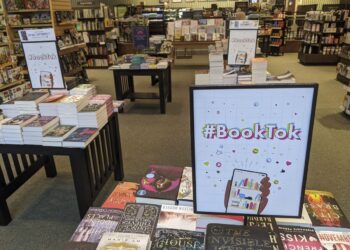
Backlist book marketing has become one of the most powerful growth levers available to authors in the TikTok era. While traditional publishing models prioritize new releases and launch week momentum, BookTok has rewritten the rules of discovery. Older titles are not just resurfacing. They are outperforming frontlist books in sustained sales, reader engagement, and cultural impact.
If you have ever wondered why a five-year-old romance suddenly sells tens of thousands of copies in a single month, or why fantasy series from the early 2010s dominate BookTok recommendation feeds, the answer lies in how readers behave on TikTok and why emotional resonance matters more than release dates.
This guide explains why old books going viral on TikTok is not an accident, how emotional storytelling and deeply immersive series outperform launch campaigns, and exactly how authors can use backlist book marketing to drive real and repeatable results. You will also learn how to market older books without relying on hype cycles, paid ads, or publisher support.
Why Backlist Book Marketing Thrives on BookTok instead of Launch Culture
The publishing industry has historically optimized for release week success. Preorders, publicity pushes, and early reviews all converge around a narrow window of attention. However, BookTok operates on an entirely different incentive structure.
TikTok does not reward recency. It rewards relevance, retention, and emotional response.
The algorithm does not care when your book was published
According to TikTok, videos are distributed based on watch time, rewatches, saves, shares, and comments, not posting date. That means a video recommending a book from 2012 can reach millions of viewers if it triggers strong engagement signals.
Our deep dive into this dynamic in How the BookTok Algorithm Really Works and What Authors Can Control explains that content performance compounds over time. A single emotional recommendation can resurface again and again for new audiences.
This is why backlist book marketing consistently outperforms launch focused strategies on TikTok. The platform allows discovery to happen at the moment a reader is emotionally primed, not when a publisher schedules a release.
BookTok readers do not browse by publication year
Circana BookScan reported that BookTok helped sell more than 59 million print books in 2024 alone, with the majority of those sales coming from backlist titles rather than new releases, backlist now accounts for 70% of print sales. Romance and fantasy backlist books saw the largest lift, particularly titles published two to five years earlier, which experienced gains of over 1,600%.
This aligns with what we documented in BookTok for Authors How TikTok Is Driving 59 Million Book Sales. BookTok users search by feeling, trope, and emotional payoff. They do not filter by release date.
Emotional Resonance Is The Currency of Backlist Book Marketing
The single biggest reason old books going viral outperform new releases is emotional proof.
A new book has potential. A backlist book has evidence.
Emotional reactions convert better than marketing claims
On BookTok, readers do not say this book is well written. They say this book destroyed me. They cry on camera. They film reaction videos mid chapter. They post updates saying they could not stop reading until three in the morning.
This emotional authenticity is far more persuasive than polished launch content.
A 2021 Nielsen study on consumer trust found that 88% of people trust recommendations from other consumers over brand messaging.
Backlist titles benefit because they already have years of reader reactions, quotes, and emotional receipts. Backlist book marketing amplifies existing love rather than trying to manufacture urgency.
Time creates credibility
Older books often come with thousands of reviews, fan art, trope discussions, and rereads. When a BookTok creator recommends a backlist title, viewers subconsciously register that longevity as quality.
This is why how to market older books starts with curating reader emotion rather than pitching the premise.
Why Deeply Immersive Series Dominate Old Books Going Viral Trends
If emotional resonance is the spark, series depth is the accelerant.
BookTok rewards long reading journeys
TikTok users favor content that promises immersion. A standalone novel offers one emotional arc. A completed or partially completed series offers weeks of attachment.
Backlist series benefit because readers can immediately continue. There is no waiting period. That instant gratification increases completion rates, which in turn increases recommendation behavior.
Immersive reading behavior fuels algorithmic visibility
When readers move quickly through a series, they often post multiple videos across days or weeks. Each video reintroduces the same backlist books to new audiences, creating layered and compounding visibility over time.
This pattern helps explain why authors like Colleen Hoover, Sarah J Maas, and Madeline Miller experienced exponential backlist growth years after publication once BookTok embraced their catalogs.
From a backlist book marketing perspective, series deliver the highest return on attention because a single recommendation frequently leads to multiple purchases rather than one isolated sale.
The Psychology Behind Marketing Older Books on BookTok
Understanding reader psychology is essential if you want to turn visibility into sustained sales.
Readers seek emotional safety and payoff
Backlist books offer known emotional outcomes. Readers know if a book is devastating, hopeful, romantic, or cathartic before they buy.
A 2022 study published in Psychology of Aesthetics Creativity and the Arts found that readers are more likely to choose books with predictable emotional rewards during periods of stress.
BookTok usage surged during global uncertainty, which helps explain why emotionally intense backlist titles gained traction. Backlist book marketing aligns with this preference because it emphasizes emotional certainty over novelty.
Tropes matter more than originality
On BookTok, tropes are discovery tools. Enemies to lovers, found family, morally gray protagonists, and slow burn romance are searchable emotional promises.
Older books often predate current trend language but still deliver the same tropes. Successful creators simply translate those stories into modern trope vocabulary.
This is a critical insight for how to market older books effectively. You do not change the book. You change the framing.
How To Market Older Books Using Emotional Entry Points
Practical execution matters. Here is how authors can apply backlist book marketing strategies that align with BookTok behavior.
Lead with the feeling, not the synopsis
The highest performing BookTok videos rarely explain the plot. They focus on emotional outcomes.
Examples of emotional hooks that convert:
- “This book will make you grieve characters who never existed”
- “Read this if you want a romance that hurts and heals”
- “This series ruined every other fantasy for me”
These hooks invite curiosity without cognitive effort.
Use reader language instead of author language
Study comments and reviews on your backlist titles. Identify recurring phrases readers use to describe their experience.
Then mirror that language in your content.
This strategy improves watch time because viewers recognize their own feelings in the framing. It also increases saves and shares, which directly supports backlist book marketing visibility.
Old Books Going Viral Through Creator Amplification
Most viral backlist moments are not author led. They are reader led.
Why creators prefer recommending backlist titles
Creators benefit from recommending books that are widely available, affordable, and already loved. Backlist titles meet all three criteria.
A Creator Economy Report by Influencer Marketing Hub found that creators prioritize content with high audience trust and low risk.
Recommending a beloved backlist book is safer than hyping an untested release.
How authors can support creator driven backlist book marketing
You do not need to control the narrative. You need to remove friction.
Ensure your backlist books are:
- Easy to purchase in print and ebook.
- Clearly categorized by genre and trope.
- Consistently branded across covers and series metadata.
Then amplify creator content by commenting, sharing, and engaging without overt selling.
Metadata and Discoverability for Old Books Going Viral
Visibility does not stop on TikTok. It continues at the point of purchase.
Align metadata with BookTok language
Update your book descriptions to include tropes and emotional keywords readers search for after seeing a video.
Examples include:
- Emotional slow burn romance
- Found family fantasy series
- Heart wrenching second chance love story
This alignment ensures that interest generated on TikTok converts into sales.
Book Metadata Optimization: 7 Hidden Elements That Boost Discoverability by 55%
Categories matter more than keywords
Amazon and retailer categories influence algorithmic recommendation systems. Placing backlist titles in accurate and competitive categories increases their shelf life after viral moments.
This operational layer is often overlooked in backlist book marketing, yet it directly impacts results.
Case studies of Backlist Book Marketing Wins
Romance backlist resurgence
Colleen Hoover’s It Ends With Us was published in 2016 but became one of the best selling books of 2022 due to BookTok exposure. According to NPD BookScan, the title sold over 2.7 million copies in the United States in a single year after going viral.
The book’s emotional intensity and reread appeal made it ideal for organic amplification.
Fantasy series revival
Sarah J. Maas saw her Throne of Glass series reenter bestseller lists nearly a decade after initial publication. BookTok creators framed the series around emotional payoff and character arcs rather than plot complexity.
These examples show that backlist book marketing is not genre specific. It is emotion specific.
How Authors Can Build A Long Term Backlist Book Marketing System
Viral moments are unpredictable. Systems are not.
Create a content library for your backlist
Develop reusable content themes for each backlist title:
- Emotional hooks.
- Trope explanations.
- Reader quotes.
- Series reading order guides.
This allows you to participate consistently without burnout.
Encourage reader participation
Ask readers to share reactions, favorite moments, or character opinions. Engagement driven prompts increase algorithmic reach and deepen community investment.
Track performance over time
Monitor which backlist titles receive sustained attention. Double down on books that resonate emotionally rather than spreading effort evenly.
This data informed approach is central to sustainable backlist book marketing.
Why Backlist Book Marketing Outperforms Launch Campaigns Long Term
Launch campaigns create spikes. Backlist strategies create plateaus.
According to Circana BookScan data, backlist titles (books published more than one year ago) account for approximately 70% of all print book sales in the United States, a share that has grown steadily from 60% in 2018 to 65% in 2020 and continues rising. This means the vast majority of book purchases aren’t new releases but older titles finding new readers.
BookTok accelerates this reality by surfacing books when readers are ready rather than when marketing schedules dictate. BookNet Canada research found that backlist titles promoted on BookTok saw sales increases of up to 1,698% for books published 2-5 years earlier, compared to 660% for standalone new releases.
When authors invest in how to market older books, they build an asset base that compounds instead of decays.
Old Books Going Viral On TikTok For Sustainable Author Growth
Backlist book marketing is not a fallback strategy. It is the most aligned approach to how readers discover, trust, and recommend books today.
Old books going viral on BookTok succeed because they deliver emotional certainty, deep immersion, and social proof. They are not fighting for attention in a crowded launch window. They are waiting to be felt.
For authors, the opportunity is clear. Focus less on chasing novelty and more on amplifying resonance. Your backlist is not behind you. It is your strongest growth engine.
When you understand how to market older books through emotion, community, and systems, you stop relying on luck and start building momentum that lasts.