Real Crimes, Real Experience
Few authors bring the authenticity to crime fiction that Kim Booth does. A retired detective with more than 35 years of experience investigating homicide, fraud, serial killers, and complex international cases, Booth has turned his lifetime in law enforcement into a second career as a novelist.
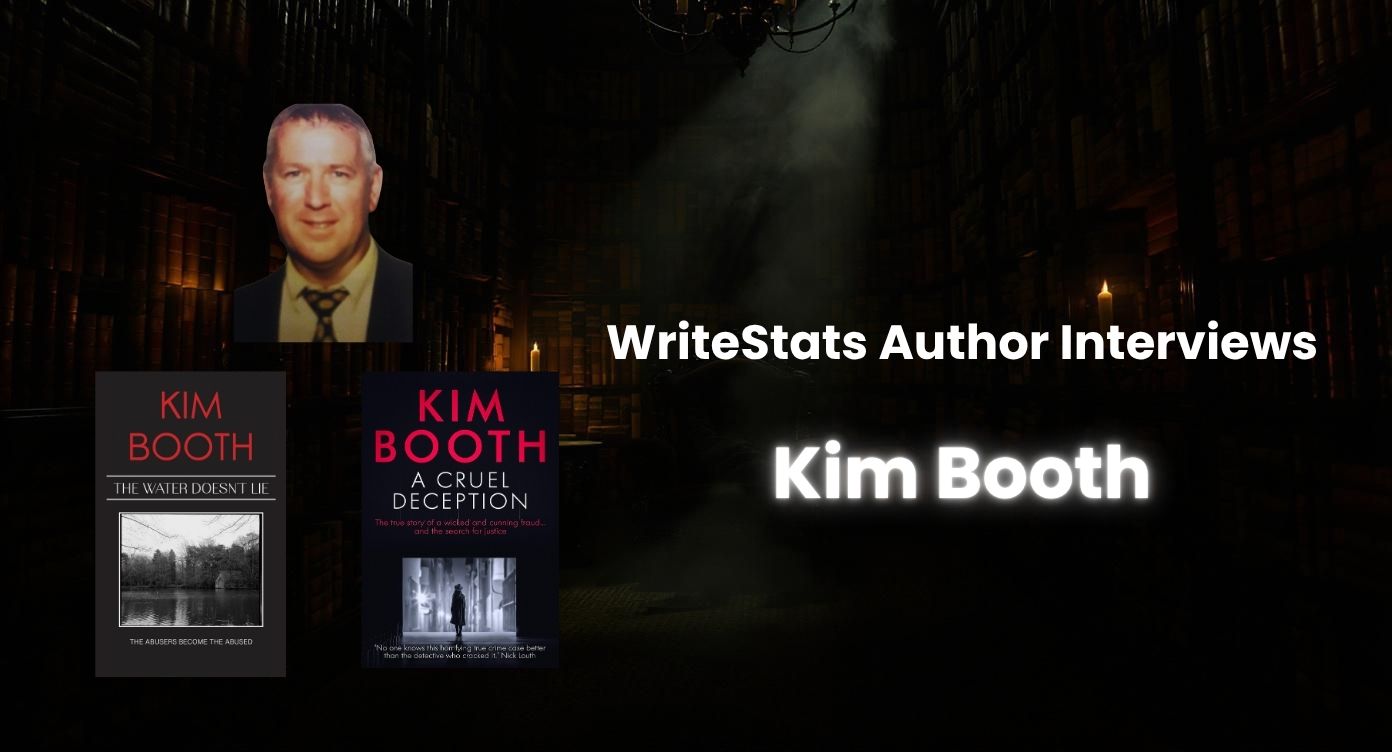
Based in the United Kingdom, Booth is the author of two crime novels:
Each draws directly from the world he knows best: real policing. His tagline — “Real Crimes. Real Experience. Fiction That Cuts Deep.” — captures his unique blend of truth and storytelling.
The Beginning: A Case That Became a Calling
Booth’s journey into writing began not with a creative dream but with a victim’s request.
“I dealt with a fraud that financially ruined an elderly couple,” he explains. “The victims asked me to write a book about the offence to warn others… but only after they had both died.”
That promise became A Cruel Deception, a novel rooted in the emotional reality of financial crime. His second book, The Water Doesn’t Lie, began as a challenge from a fellow author who sought his advice on police accuracy. The result? A meticulously detailed police procedural that blends investigative realism with page-turning tension.
“I carried on since then,” Booth says, a simple statement that conceals decades of experience and craft.
What Drives the Writing
When asked what influences his storytelling most, Booth’s answer is modest but telling:
“A chance to write my stories and experiences down for people to find interesting and enjoy.”
The drive to document and share true-to-life experiences echoes through his work. His motivation is equally pragmatic:
“The end product,” he says simply, when asked what keeps him going when writing gets tough.
For Booth, writing isn’t about fame or even livelihood.
“I don’t rely on my books; it’s a hobby.”
That freedom lets him focus on authenticity rather than market trends.
Writing Process and Tools
Booth’s process is refreshingly straightforward:
“A computer and Microsoft Word. Nothing too complicated.”
He keeps his writing tools minimal, relying instead on lived experience to shape plot, tone, and character. He reads around ten books a year, often within crime and investigative genres, staying connected to contemporary storytelling while maintaining his grounded realism.
Publishing Independently
Booth is entirely self-published, handling his creative and production process through freelance collaborators:
“A proofreader and editor, graphic artist, and photographer,” he notes.
His choice reflects the growing number of independent authors prioritizing control over creative direction and accuracy. According to Reedsy and Written Word Media, self-publishing continues to grow among professionals leveraging niche expertise, a category where Booth clearly thrives.
Though he doesn’t recommend or rely on traditional publishers, his independence underscores a broader truth: writers from non-literary careers can build meaningful creative legacies on their own terms.
Challenges of a Dual Life
Despite his expertise, Booth admits the hardest part of writing is simply finding the time.
“I try to set hours apart when possible,” he says.
Balancing creativity with post-career commitments is a common challenge among authors who write as a second profession. His approach, which involves disciplined time blocking and patient consistency, is one that many part-time writers will recognize.
On AI in Writing and Publishing
Booth’s view on artificial intelligence is pragmatic, not alarmist:
“I’m fine with using AI, as long as it doesn’t replace authors or use their work.”
This balanced stance mirrors a growing consensus across publishing: AI can streamline processes like editing, formatting, and analysis, but should never compromise originality or authorship. Booth’s response places him among the many experienced professionals embracing technology as a tool, not a threat.
Legacy and Future Work
When asked about the legacy he hopes to leave, Booth answers succinctly:
“Documented experiences.”
That clarity, recording reality through fiction, defines his storytelling ethos. His next project continues this mission:
“Another crime fiction book based on actual crime investigations I have been involved with.”
Like his previous work, the upcoming novel promises procedural precision and moral complexity, with storytelling drawn from life rather than imagination.
Kim Booth’s Perspective in Context
Booth’s career path aligns with a powerful trend: professionals transforming real-world expertise into credible genre fiction. His approach — rooted in firsthand authenticity rather than literary artifice — resonates with readers who crave believable detail.
As data from K-lytics shows, crime and police procedurals remain among the most read digital genres, commanding over 22% of Kindle Unlimited page reads. Authors like Booth offer something rare: procedural accuracy paired with emotional truth.
His writing also demonstrates a core principle that WriteStats research continues to confirm: authentic lived experience is one of the strongest differentiators in modern publishing. Readers can feel when a story is written from real knowledge.
Final Thoughts: Experience as Story
Kim Booth’s evolution from detective to author illustrates how deeply personal experience can fuel compelling fiction. He doesn’t romanticize police work or sensationalize crime; he humanizes it, showing both the logic and emotion behind every case.
Through A Cruel Deception, The Water Doesn’t Lie, and his forthcoming novel, Booth gives readers more than a mystery to solve; he gives them a glimpse into the moral and emotional realities of the world behind the badge.
As he told WriteStats, “It’s about documenting experiences.”
And that’s exactly what he’s doing, one authentic story at a time.
🌐 Explore More at WriteStats
Loved this interview? There’s more where that came from. Dive into exclusive author features, data-driven insights, and the latest publishing trends that help writers grow.
👉 Visit WriteStats.com to explore articles, interviews, and resources designed for today’s storytellers.