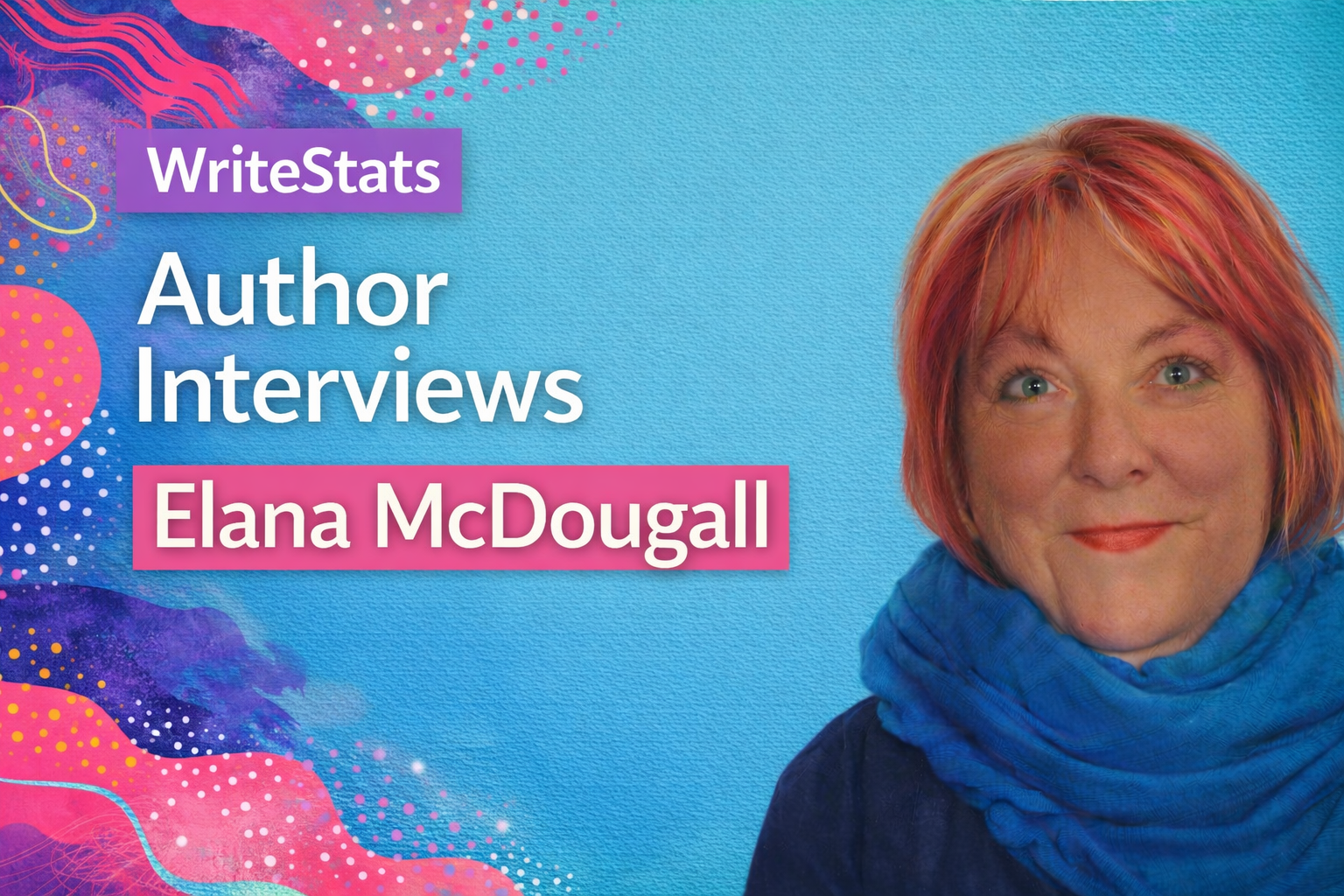
When readers search for Elana McDougall fantasy romance books, they’re often looking for more than magic and danger. They’re looking for immersive world-building, emotional depth, and stories that linger long after the final page.
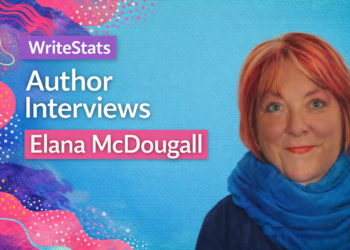
Elana McDougall, a Canadian author and the creative force behind The Eldritch of Hallows series, writes urban fantasy romance that blends magic, mystery, and deeply human stakes. With three published novels and a fourth on the way, she has carved out a distinctive space in the indie fantasy romance landscape, one rooted in authenticity and craft.
In this WriteStats Author Interview feature, we explore her writing journey, publishing strategy, stance on AI in writing, and the philosophy behind her stories.
Who Is Elana McDougall?
Elana McDougall is a lifelong reader turned published author, she retired before finally committing to finishing the stories she had carried for decades.
“I was a reader. I read every book in my elementary school library. As a child, I told myself stories when I went to bed.”
She describes discovering unfinished manuscripts later in life:
“I would find them later, stuffed into drawers, or hidden in closets.”
Eventually, retirement provided what many aspiring authors seek: time.
“Finally, when I retired, I found the time to take one of those stories and finish it.”
Today, she has three published novels and is preparing the fourth installment in her series.
The Eldritch of Hallows Series: Urban Fantasy Romance with Depth
Elana McDougall is the author of:
- Hidden Magic: The Eldritch of Hallows #1
- Scorched Earth Magic: The Eldritch of Hallows #2
- Blood Moon Magic: The Eldritch of Hallows #3
The series centers around Hallows, North Carolina, a hidden sanctuary for magical beings known as the Eldritch: trolls, mages, shapeshifters, and Fae. Her upcoming fourth book, Wild Magic, will conclude the arc.
“For over 300 years, The hidden village of Hallows, North Carolina has been a sanctuary for magical beings called the Eldritch—trolls, mages, shapeshifters and Fae.”
The premise blends urban fantasy, paranormal romance, and internal political conflict within magical communities, key search terms readers use when exploring the genre.
However, what distinguishes Elana McDougall’s fantasy romance novels is not only the magical structure, but the emotional undercurrent driving them.
How Elana Started Writing Fantasy Romance
Many authors search for advice on how to start writing fantasy romance. Elana McDougall’s path offers an instructive answer: read widely, internalize craft, and respect language.
“I write stories that combine the fantasy, murder mysteries and romance novels I enjoy.”
Growing up, her favorite author was Mary Stewart:
“I loved her prose. She taught me your language was as important as your plot.”
That emphasis on prose is particularly notable in today’s fast-paced genre fiction market, where high-concept premises often overshadow language. For McDougall, craft is not secondary; it’s foundational.
The Writing Process Behind Elana McDougall’s Books
Elana keeps her workflow straightforward:
“I use Microsoft for writing. If I get an idea, I’ll create a note on my phone. Sometimes I’ll dictate something on my phone, usually at night, just as I’m about to fall asleep. And then in the morning, I try to figure out what I actually meant to say.”
She also relies on ProWritingAid for polishing:
“I obsess about my writing. I go over it and over it and over it. I could write the story in half the time if I didn’t edit and re-edit.”
Notably, she reads about nine books annually, a reminder that many authors balance writing with reading and other commitments, rather than consuming books at an extreme pace.
When stuck, she doesn’t force it.
“I reread what I’ve done and if I can’t find the answer, then I step back. I’ll read. I’ll go to the movies. I’ll take a yoga class… I know that in the back of my mind, I’m mulling over the story. Plotting. Figuring. Rearranging. And then I’ll go back.”
This cognitive incubation period aligns with research on creative problem-solving: stepping away often accelerates narrative breakthroughs.
Self-Publishing vs Traditional Publishing: Elana McDougall’s Experience
Elana McDougall’s journey reflects a common indie path:
“I tried to get published traditionally, but it is very tight. My books aren’t trendy. I’ve joked that I should’ve titled the first one ‘The Woman in the Magic Village.’”
Ultimately, she chose Kindle Unlimited:
“I tried to publish on both Kobo and Kindle; unfortunately, Kindle Unlimited requires authors to be exclusive to it.”
Her experience underscores a key reality of the platform:
“It is a passive platform. You publish and then it’s up to you to do the marketing.”
For production, she initially used Reedsy for editing, formatting, and cover design before building her own network.
Importantly, she does not depend on writing for income:
“I’m fortunate to not have to depend on my novels to earn my living… would I like to sell more books? Yes, but that’s mostly because I want more people to read them not necessarily to make more money.”
That distinction—impact over income—shapes her long-term outlook.
Elana McDougall on AI in Writing and Publishing
Few topics generate as much debate as AI in writing and publishing. Elana McDougall’s position is clear.
“I am against using AI tools.”
And more pointedly:
“Writing is about the human experience, even in fantasy and romance. AI cobbles together ideas that others have given it. It isn’t authentic.”
Whether one agrees or not, her stance highlights a core tension in the industry: efficiency vs. authenticity. Her perspective aligns with authors who see storytelling as an inherently human act of synthesis and lived experience.
Creating Stories Readers Can’t Let Go Of
If you study reader behavior data, one recurring theme emerges: readers return to authors who create emotional immersion.
Elana McDougall doesn’t describe her books as “earth-shattering,” yet her goal reflects something arguably more powerful:
“They aren’t earth-shattering or life-altering, but they have given comfort and enjoyment to people.”
That sense of comfort and narrative attachment connects directly to what we’ve analyzed in our breakdown of book hangover psychology, the phenomenon where readers struggle to move on after finishing a story. You can explore the research behind that here:
Book Hangover Psychology: What Authors Need to Know About Creating Stories Readers Can’t Let Go Of
Fantasy romance thrives on this effect: immersive worlds, emotional stakes, and characters readers don’t want to leave behind.
What Legacy Does Elana McDougall Hope to Leave?
When asked what legacy she hopes her writing will leave, her answer is simple and grounded:
“In the end, there will be four books that I wrote and published… I can say proudly I was an author.”
That clarity—finishing the series, standing behind the work, claiming the title—is a powerful milestone for any writer.
With Wild Magic set to conclude the Hallows saga, readers of Elana McDougall fantasy romance can expect a finale built on internal conflict, loyalty, sacrifice, and protection of both human and Eldritch worlds.
What Writers Can Learn from Elana McDougall
Elana McDougall’s career reflects several data-backed realities of modern publishing:
- Traditional publishing remains competitive and trend-sensitive.
- Kindle Unlimited offers access, but requires author-led marketing.
- Editing discipline slows production but strengthens craft.
- Creative incubation (stepping away) supports narrative problem-solving.
- Many indie authors prioritize readership impact over income dependency.
Above all, her philosophy centers on human authenticity in storytelling.
For writers navigating the evolving fantasy romance market, her journey offers a grounded reminder: finish the story, honor the craft, and define success on your own terms.
And as Elana McDougall herself demonstrates, sometimes the most powerful legacy isn’t scale; it’s completion.