If you’re an author wondering “Book Trailer ROI for Authors”, you’re not alone. Videos promise buzz, but do they deliver sales? In this in-depth guide, we’ll break down: when a book trailer adds value, when it might be a distraction, and how you can build one that maximizes your return on investment. Along the way, we’ll reference real data, surface actionable tips, and link naturally to related WriteStats posts on marketing strategy.
Why “Book Trailer ROI for Authors” Matters Right Now
Let’s begin by acknowledging the landscape. Video content dominates digital marketing. According to one producer, “Readers are 64% more willing to buy a book after watching book trailers.”
Meanwhile, an older survey found that only 15.5% of participants reported they had bought a book because of a trailer, and 46% said it influenced them. That gap, between promising stats and actual direct sales, raises the vital question: What is the true ROI of a book trailer for authors?
In other words: by asking “Book Trailer ROI for Authors”, you’re asking: “If I invest time or money in a trailer, am I going to see the payoff?” And more importantly: How do I structure the trailer so that it contributes to real results?
Poll Insights: Do Book Trailers Actually Work?
Before we lay out tactics, let’s examine what the data says. While comprehensive public studies are limited, authors and marketers have shared their findings:
- A 2012 survey found 85% of respondents said they had never bought a book solely because of a trailer.
- That same survey found 46% said a trailer did influence their decision when they were already considering the book.
- Marketing blogs report that average video conversion rates (in general) rose from 8.6% in 2016 to 12.7% in 2020.
- One blog article claimed that viewers are “52% more likely to share video content than any other kind.”
In sum: book trailers can help, but they’re seldom the only driver. For authors asking “Book Trailer ROI for Authors”, the takeaway is: Viewers may notice your trailer, but that doesn’t guarantee they’ll buy your book. Because of this, the way you frame the trailer and integrate it into your broader marketing plan becomes critical.

Understanding Book Trailer ROI: What Does “Return on Investment” Look Like?
When we talk about ROI in traditional marketing, we think spent cost vs gain in sales or visibility. For authors, book trailer ROI can include:
- Direct sales triggered by a trailer.
- Increased visibility/brand recognition (more author followers, newsletter signups, event leads).
- Higher engagement (shares, comments, click-throughs to book links).
- Pre-order or launch momentum when timed well.
So when you ask “Book Trailer ROI for Authors”, ask not just “Did it sell more books?” but also “Did it raise awareness? Did it extend my reach? Did it strengthen my platform?” Because often, the trailer’s real value lies in the long game, platform building, not just a one-off spike.
Why Book Trailers Work (and When They Don’t)
Why They Can Work
- Video = higher engagement: As noted above, video posts get more shares and engagement than static images.
- Preview the mood/genre: A well-crafted trailer can quickly convey your book’s tone, speeding up the reader’s decision-making.
- Fits digital & social formats: With platforms like TikTok, Instagram Reels, X (formerly Twitter) pushing short video, you can use a trailer as part of your repurposing strategy.
- Supports visual learners: Some readers respond better to video than text marketing.
Why They Sometimes Fail
- Cost vs reach mismatch: If few people view it, the cost may not justify the outcome.
- Poor targeting or production: A trailer with weak visuals, unclear messaging, or wrong audience will underperform.
- Lack of follow-through: A trailer that doesn’t link to a compelling landing page or isn’t integrated into a broader campaign will under-deliver.
- Genre mismatch: Some genres (e.g., literary fiction, non-fiction) may not translate as compellingly into trailer format.
Thus again, for authors curious about “Book Trailer ROI for Authors”, the answer isn’t simply “Yes you should make one” or “No you shouldn’t”, it’s “Make one well, integrate it smartly, and measure carefully.”
When Does a Book Trailer Deliver Good ROI?
Let’s highlight scenarios where you’re more likely to see positive returns:
- Strong pre-launch momentum: If you already have an engaged newsletter audience or social following, releasing a trailer can amplify that.
- Genre with visual appeal: Fantasy, romance, thriller, young-adult books often perform better with trailers because they can show epic visuals, suspense, emotion.
- Paid video ad campaigns: If you promote the trailer as a targeted ad (e.g., on Facebook/Instagram reels or YouTube), you can track cost-per-click and conversion.
- Trailer reused across platforms: If you reuse footage for Reels, Shorts, TikTok, email headers, you increase ROI via repurposing.
- Call-to-action (CTA) tightly linked: A trailer with a clear CTA (pre-order, buy now, join list) tied to the link helps conversions.
Practical Guide: How to Create a Trailer That Supports ROI
Here’s your step-by-step workflow for building and getting value from a book trailer:
Step 1: Define Your Objective
- Is it awareness (grow your author brand)?
- Is it direct sales (launch week push)?
- Is it pre-orders or newsletter sign-ups?
Choose one primary objective so you can structure your CTA and track correctly.
Step 2: Know Your Audience & Platform
- Where is your reader audience active? Instagram? TikTok? X? YouTube?
- What formats do they consume: vertical (9:16), square (1:1), horizontal (16:9)?
- What tone resonates, humour, suspense, emotional hook?
Step 3: Creative Planning
Based on research, shorter videos perform better. One article emphasises that attention spans for book trailers favour under 60 seconds.
- Choose a hook within the first 5–10 seconds.
- Highlight the core conflict or emotion, not too many details.
- Don’t spoil the ending.
- End with a clear CTA and link.
Step 4: Production & Budgeting
- Decide: DIY vs outsource. If budget is low, use simple software and stock footage.
- Keep cost reasonable in relation to your audience size. One blog cautions that unless you drive click-throughs, a fancy trailer may be sunk cost.
- Make versions in different aspect-ratios for different platforms.
Step 5: Distribution Strategy
- Leverage your newsletter, website, social media channels.
- Embed the trailer in your author site and book landing page.
- Use paid or organic ads if budget allows.
- Schedule posts around launch or promotional events.
Step 6: Tracking & Measuring ROI
- Metrics to track (per article): view count, engagement rate, click-through rate (CTR), conversion rate.
- Tie those to your objective: e.g., if objective = pre-orders, track pre-order numbers during trailer campaign.
- A more refined measure: cost per sale attributable to the trailer (if you can estimate).
- Use A/B testing: e.g., two versions of trailer or two CTAs to see what works best.
Step 7: Repurpose & Extend Lifespan
- Create shorter “teaser” versions for social.
- Use trailer clips in email campaigns.
- Use stills or GIFs from trailer in banners or ads.
- Republish or reshare in cycles (e.g., when you have a new edition, or a sale).
Case Studies: What Book Trailer ROI Looks Like in Action
Genre where trailers excel
- Fantasy & Science Fiction: visuals help communicate world-building, epic stakes.
- Romance: emotion, conflict, high stakes, mood work well in trailer format.
- Thriller & Horror: suspense, tone, visuals can intrigue quickly.
Genre where trailers may lag
- Literary fiction or memoirs: those rely more on voice, acclaim, reader word-of-mouth than high visual spectacle.
- Certain non-fiction: unless highly visual or narrative-driven, a trailer may add little compared to other content (newsletter, podcast, blogs).
Example snippets
One marketing article reports that “people are 52% more likely to share video content than any other kind.” That suggests sharing (and thus visibility) is a key part of ROI, even if direct conversions are modest.
Another article points out that while well-executed trailers can bolster reach, “There is little doubt … online video in general has seen an incredible upsurge. That by itself, however, doesn’t bolster any data supporting the usefulness of the book trailer.”
In short: visibility without conversion still counts, but you should plan for it.
Common Mistakes Authors Make (And How to Avoid Them)
- Creating a trailer too early: Without an established audience, the trailer may get little reach. Fix: build your platform first (newsletter, social) and then launch the trailer.
- Producing a long or unfocused video: Attention spans are short. Research shows shorter triggers better engagement. Keep your trailer 30-60 seconds if possible.
- No clear CTA or landing page: If viewers watch and nothing happens next, you lose momentum. Always link to a strong landing page or book buy page.
- Neglecting tracking: If you don’t measure views, clicks, conversions, you’ll never know if the trailer delivered ROI.
- Expecting the trailer to convert alone: It’s not a magic bullet. Use it as part of a campaign, not an isolated move.
Budget Planning Tips to Boost Book Trailer ROI for Authors
Let’s consider cost vs potential return to help you set realistic expectations.
- Low-budget DIY option: $0–$300 (using stock footage, simple editing).
- Moderate: $300–$1,200 (voice-over, custom footage, animation).
- High: $1,000+ (professional production, actors, bespoke animation).
Convert cost into ROI expectations: if you spend $500, and your royalty per book is $3, you need ~167 additional sales to break even. If you spent $100, you need ~34 sales.
Therefore, ask: Do you have the audience + targeting to generate those additional sales? If yes, go ahead. If no, consider redirecting budget into other marketing (newsletter, ads, content).
One blog emphasised: “Creating a trailer for your book isn’t going to guarantee sales.” Set realistic goals.
Putting It All Together: A Sample Timeline for an Author
Here’s a hypothetical workflow for a mid-list author preparing a new fantasy novel:
12 weeks before launch
- Build audience (social posts, reels, newsletter)
- Announce cover reveal → teaser posts
8 weeks before launch
- Release short teaser trailer (15 seconds) with strong visuals + CTA “Pre-order now”
- Embed teaser in email and social
6 weeks before launch
- Release full trailer (45 seconds) on YouTube, embed on website, share social, run small paid ad campaign ($100) targeting fantasy readers
- Track views, CTR to book page
Launch week
- Share trailer again, boost via social, ask newsletter subscribers to share
- Add trailer link to book description, Amazon author page
Post-launch
- Repurpose trailer into Reels/TikToks
- Analyze data: Did CTR lead to sales? Which audience responded?
- Adjust next campaign accordingly
At each step you’re asking: Does this increase my visibility? Am I reaching engaged readers? Am I seeing additional pre-orders or sales? That is how you monitor your Book Trailer ROI for Authors.
When You Might Skip the Trailer
There are scenarios where a trailer may not deliver good ROI:
- If your budget is minimal and you have no audience, maybe start with static content + Reels instead.
- If your genre is low-visual (e.g., essay, academic, niche non-fiction) and your audience values text more than video.
- If you’re already maxing out other high-ROI channels (newsletter, guest posts, podcast interviews) and don’t have capacity to promote the trailer effectively.
In those cases, you might delay the trailer until you have stronger platform metrics—or use a simple teaser video instead.
Final Takeaways: Measuring Long-Term Book Trailer ROI for Authors
So what does it all mean for you, the author, asking “Book Trailer ROI for Authors”? Here are your key takeaways:
- Trailers can boost visibility, engagement and sometimes sales, but they aren’t magic.
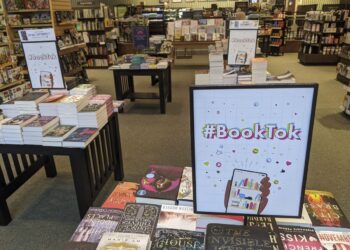
- You improve ROI by defining objective, targeting the right audience, integrating into your broader marketing (such as what we outlined in our Holiday Book Marketing for Authors post) and leveraging video content across formats (as we discussed in BookTok for Authors).
- Measure metrics: views, CTR, conversions, cost per sale.
- Repurpose the trailer and recycle it for long-term value.
- Start modestly, test your results, then scale if it works.
Action checklist for authors today:
- Define your trailer objective.
- Identify your target audience and platforms.
- Sketch a 30-60 second script with strong hook + CTA.
- Decide budget and format (DIY vs outsource).
- Plan distribution timeline and promotion (newsletter, social, ads).
- Set tracking links and baseline metrics.
- Repurpose the video into shorter clips and reuse for at least 3 months.
- After launch, analyze results: views → clicks → sales. Adjust for next title.
If you follow this roadmap, you’ll be well-positioned to answer confidently the question of Book Trailer ROI for Authors, knowing what you invested, what you gained, and how to improve next time.
Here’s to your next book trailer being a strategic asset, not just a nice-to-have.
Happy writing, and best of traction ahead!