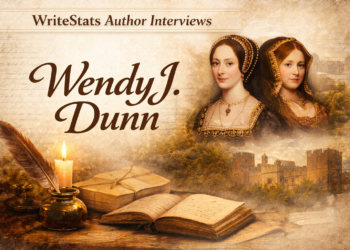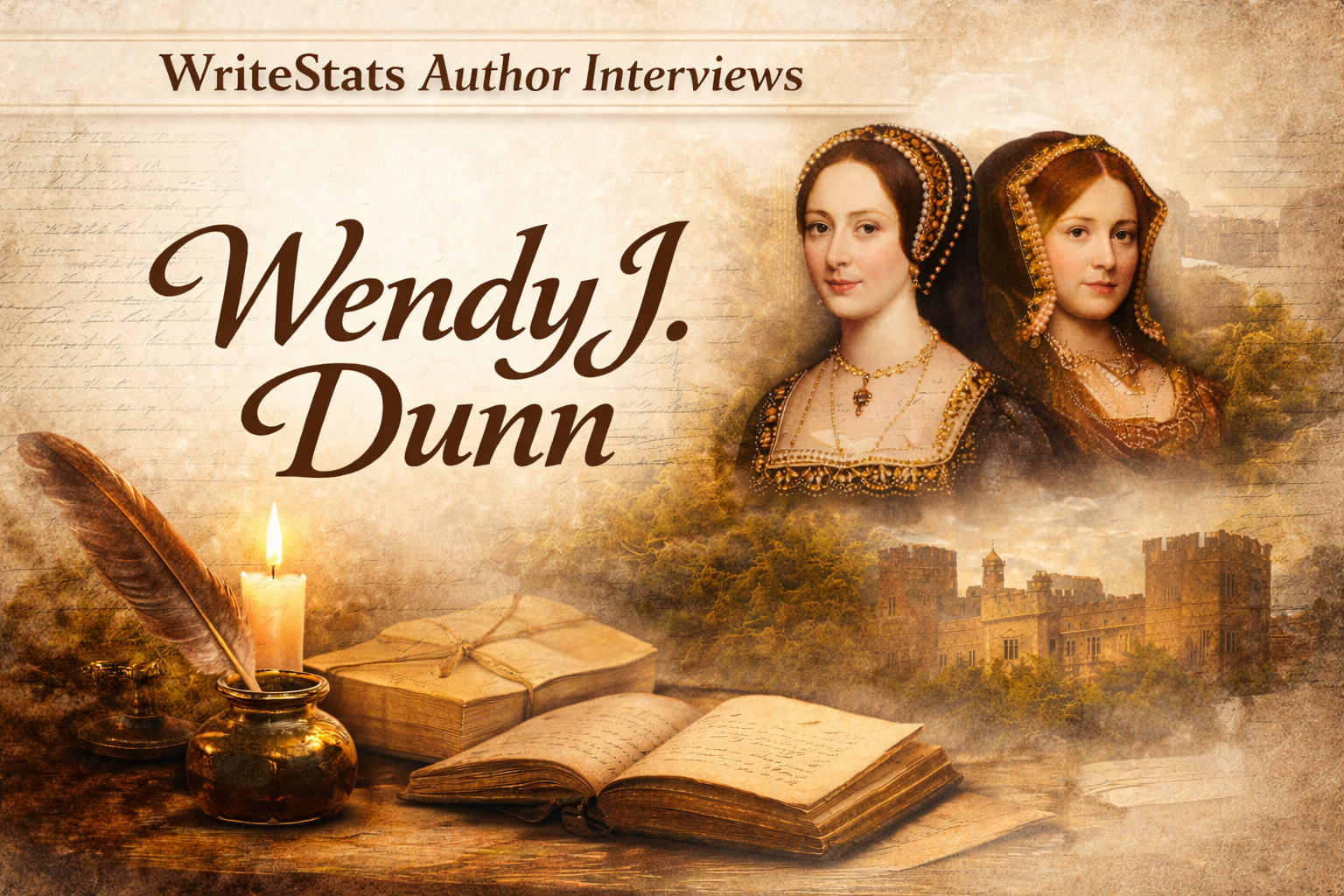
Few authors working in historical fiction today combine rigorous research, feminist insight, and emotional depth as consistently as Wendy J. Dunn. An award-winning Australian novelist, nonfiction writer, educator, and playwright, Dunn has built a career around one central mission: restoring women to the historical record.
Best known for her novels about Anne Boleyn, Katherine of Aragon, and other Tudor-era women, Wendy J. Dunn writes stories shaped not by spectacle, but by empathy, scholarship, and lived experience. Her bibliography includes acclaimed historical novels such as Dear Heart, How Like You This?, The Light in the Labyrinth, The Duty of Daughters, All Manner of Things, and Shades of Yellow, alongside nonfiction like Henry VIII’s True Daughter: Catherine Carey, A Tudor Life.

In this WriteStats Author Interview, Wendy J. Dunn reflects on her long writing journey, the realities of publishing, the economics of authorship, and why telling women’s stories still matters—perhaps now more than ever. Her responses also contribute to our larger, ongoing research into global author experiences .
A Writing Journey Shaped by Reading and Resilience
Wendy J. Dunn’s path to authorship was not quick or easy and she is refreshingly candid about that reality.
“I wanted to write from childhood, but the road has not been an easy one. But I don’t think many writers have an easy journey.”
Rather than romanticizing struggle, she contextualizes it. Writing, for Dunn, is inseparable from reading, research, and persistence.
“I believe the old adage ‘we are what we eat’ can also be revised to ‘we are what we read.’ To be a good writer, we need to read because reading is the huge generator of what feeds our writing.”
This philosophy has guided Wendy across decades of work, seven published books, and an academic career in writing education. Importantly, she emphasizes that reading is not secondary to writing, it is its equal.
“Reading is the other side of writing. For me, reading books will always return me to writing.”
Writing Historical Fiction: On Giving Women Their Voices Back
When asked about influences, Wendy J. Dunn names classic historical storytellers: Mary Renault, Winston Graham, Rosemary Sutcliff, Elizabeth Goudge, and Robert Graves. However, she is clear that influence goes beyond style.
“I am influenced by my passion to give voice to the stories of women that have been erased or told through the prism of patriarchy.”
This feminist lens defines her work. Rather than retelling familiar Tudor narratives from positions of power, Wendy J. Dunn reframes them from within through daughters, nieces, ladies-in-waiting, and women history often sidelined.
“I draw from a feminist standpoint for all my work.”
As explored in our broader analysis of the genre: Historical Fiction for Authors: Market Trends, Writing Tips, and Untold Stories on the WriteStats blog, this approach aligns with a growing reader appetite for historically grounded but socially conscious narratives.
What Motivates Wendy J. Dunn to Keep Writing When Writing Gets Hard
Unlike many interviews that soften the reality of creative work, Dunn leans into its difficulty.
“Writing is hard. It is meant to be hard.”
Rather than discouraging her, that difficulty is part of the appeal.
“I think that fact acts as motivator for me to keep writing because I enjoy the challenge of that ‘hardness’.”
She also speaks candidly about the emotional cost of stepping away from writing and the relief of returning.
“I also know that once I get back into writing, I will be happier place, mind and spirit.”
Tools, Habits, and the Working Writer’s Reality
From a practical standpoint, Wendy J. Dunn’s process is refreshingly straightforward.
“I use a word program and Scrivener.”
She reads approximately 30 books per year, reinforcing her belief that consistent reading is foundational to craft.
However, her interview also highlights a crucial data point we see repeatedly at WriteStats: being traditionally published does not guarantee financial stability.
“Alas, I cannot depend on earning my living through writing.”
Instead, she balances authorship with tutoring work at Swinburne University’s Writing Department.
“It means taking on tutoring work… to financially support my life.”
This reality echoes broader industry trends we track, where even prolific, award-winning authors often rely on parallel careers.
How Long It Really Takes to Get Published
Wendy J. Dunn’s publishing story is one of perseverance. She sent 12 queries and waited five years for her first publishing offer.
“I was first published in 2002 by a small USA publisher… the whole experience was one that I now look back on with gratitude.”
While supportive, that relationship also illustrates why authors must evaluate publishers carefully. When asked if she would recommend her publisher to others, her answer is simple:
“No.”
Transparency like this is essential to the WriteStats mission, helping authors make informed, data-driven decisions about their careers.
AI, Publishing, and the Line She Won’t Cross
Wendy J. Dunn’s perspective on AI is nuanced and pragmatic.
“I am using AI for marketing ideas. It is a useful tool for lots of things, but not to write our work.”
Her stance reflects a growing consensus among experienced authors: AI can support visibility and workflow, but creative voice remains human.
The Legacy Wendy J. Dunn Hopes Her Writing Will Leave Behind
When asked about legacy, Wendy J. Dunn doesn’t cite awards or sales.
“Readers who will discover and enjoy my work for years to come.”
That focus on longevity—on slow discovery rather than fast hype—mirrors the long-tail publishing dynamics we analyze at WriteStats.
She is currently working on both a nonfiction book and a novel centered on a woman who served Elizabeth I across multiple reigns.
“I’m looking forward to the journey of writing it.”
What Writers Can Learn from Wendy J. Dunn’s Publishing Career
Wendy J. Dunn’s interview encapsulates many of the realities facing today’s historical fiction authors: deep research, delayed rewards, financial complexity, and unwavering commitment to storytelling.
Her career is not an outlier; it is a data-supported example of what sustained authorship often looks like.
And that is precisely why her voice matters.