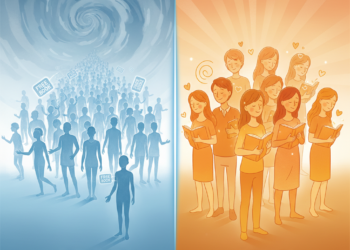
For years, authors have repeated the same comforting idea to one another. Readers take their time. Readers sit with a book decision. Readers thoughtfully compare options, read long descriptions, and slowly warm up to a purchase.
It feels reassuring. It also feels respectful of the craft.
Unfortunately, it is not true.
How Readers Really Decide is far faster, more instinctive, and more ruthless than most authors expect. The data tells a very clear story. Readers do not wait around. They decide quickly, and they move on just as fast.
In fact, survey results from WriteStats show that over 87% of readers make a purchase decision quickly, either instantly, after reviews, or after sampling just a few pages. Very few readers spend days thinking about whether to buy a book.
This insight matters because when authors misunderstand reader patience, they misallocate effort. They polish the wrong things. They delay the wrong launches. They fix problems too late.
This guide will break down Why readers decide fast, what authors consistently get wrong, and exactly how to prepare your book to win in the first moments that actually matter.
By the end, you will understand How Readers Really Decide, and more importantly, how to design your book and your marketing so speed works in your favor instead of against you.
How Readers Really Decide in the First Few Seconds
When a reader encounters your book, they are not entering a quiet room to reflect. They are standing in a digital marketplace filled with noise, choice, and competition.
Psychology research consistently shows that humans rely on fast judgments to reduce cognitive load. People form first impressions in milliseconds and then look for information that confirms those impressions rather than challenges them.
This same mechanism applies directly to books.
Readers scan. They glance. They skim. They make a snap decision about whether something feels right for them.
How Readers Really Decide is not about patience. It is about efficiency.
Digital retail environments amplify this behavior even further. A Nielsen Norman Group study on online behavior found that users typically read only about 20 to 28% of the words on a webpage.
That means most readers are not carefully reading your book description, your author bio, or your marketing copy. They are sampling signals.
This explains Why readers decide fast. They are not lazy or dismissive. They are simply optimizing their attention.
The Myth of Reader Patience and Why Authors Believe It
Many authors believe readers take time because the writing process itself takes time. A novel can take years to write, edit, and refine. It feels logical to assume readers approach books with the same slow care.
However, creation time and consumption decisions are not the same.
Another reason the myth persists is survivorship bias. Authors remember the rare reader who says they thought about a book for weeks. They do not see the thousands who glanced at a cover and scrolled past in seconds.
How Readers Really Decide is shaped by what readers do, not what they say after the fact.
There is also a strong emotional component. Believing readers take time allows authors to delay difficult improvements. It becomes easier to say, the book just needs time to find its audience, rather than confronting issues with packaging, positioning, or clarity.
But data consistently shows that the first impression window is short.
According to Amazon, many readers use the Look Inside feature to decide whether to buy a book, and most do not read more than a few pages before deciding.
That means Why readers decide fast is directly connected to how quickly a book communicates genre, tone, and quality.
How Readers Really Decide Based on Covers
One of the strongest signals readers use is the cover.
In a previous WriteStats analysis, we explored how readers judge books by their covers and why first impressions are psychological, not superficial:
Do Readers Judge Books by Their Covers? The Psychology of First Impressions
Research from the Journal of Consumer Psychology shows that visual cues influence trust and perceived value within seconds of exposure.
When a reader sees your cover, they are not asking whether the story might be good. They are asking whether the book belongs to the category they want right now.
How Readers Really Decide at this stage is binary. Either the cover signals familiarity and professionalism, or it introduces friction.
This is a major reason Why readers decide fast. The brain is trained to recognize patterns. Genre specific cover design reduces effort. Confusing design increases it.
Authors who believe readers will take time to understand a unique cover concept are often disappointed. Readers rarely invest effort at the browsing stage.
How Readers Really Decide When Reading Descriptions
After the cover, the book description becomes the next filter.
However, the description is not read line by line. It is scanned.
Eye tracking studies from Nielsen Norman Group show that users scan text in an F shaped pattern, focusing on the first few lines and the left side of the text.
This means How Readers Really Decide is heavily influenced by the opening lines of your description.
If those lines fail to establish genre, stakes, and tone immediately, readers move on.
This also explains Why readers decide fast when descriptions are vague. Ambiguity forces the reader to work harder, and effort is a cost.
Strong descriptions do not tease endlessly. They orient quickly.

Reviews and How Readers Really Decide to Trust
Reviews are often misunderstood by authors. Many believe readers carefully read dozens of reviews before buying.
In reality, most readers glance at the average rating, skim one or two recent reviews, and look for confirmation rather than deep analysis.
A BrightLocal consumer trust survey found that 79% of consumers trust online reviews as much as personal recommendations.
This behavior aligns with How Readers Really Decide. Reviews function as social proof, not detailed evaluation.
Our earlier WriteStats breakdown on reviews versus samples explains how readers use reviews to reduce risk quickly:
How to Sell More Books Without Spending More: Reviews vs Samples Explained
This also reinforces Why readers decide fast. Reviews are shortcuts. They exist to save time.
How Readers Really Decide After Sampling Pages
Sampling a few pages is often the final gate.
When readers click Look Inside or download a sample, they are not casually browsing. They are actively deciding.
Research from publishing consultants and Amazon KDP guidance consistently emphasizes that the opening pages determine whether a reader continues.
How Readers Really Decide here depends on clarity and momentum.
If the opening pages are slow, confusing, or overly indulgent, readers leave.
This is not because they lack patience. It is because they have alternatives.
Why Readers Decide Fast in a Crowded Market
The modern book market is saturated.
According to Bowker, millions of new titles are published each year globally, with self published titles making up a growing share.
Choice overload leads to faster decision making, not slower.
Psychologist Barry Schwartz explains that when faced with too many options, people rely more heavily on heuristics and snap judgments.
This directly affects How Readers Really Decide in online bookstores.
Speed is not a flaw in the reader. It is a survival strategy.
What Authors Get Wrong About Slow Burn Success
Some authors point to slow burn success stories as evidence that patience exists.
However, most slow burn successes still passed the initial fast decision test. The book had strong packaging, clear positioning, and positive early signals.
Growth happened over time, but the first impression worked immediately.
Understanding How Readers Really Decide helps separate launch timing from decision speed.
Readers decide fast. Sales accumulate slowly.
Those are different processes.
How to Prepare Your Book for Fast Decisions
If speed favors prepared books, preparation becomes the author’s responsibility.
Here is how to align with How Readers Really Decide:
Clarify Your Genre Signals
Make sure your cover, subtitle, and description instantly communicate genre. Study the top books in your category and identify common visual and language patterns.
This reduces friction and supports Why readers decide fast.
Optimize the First Lines Everywhere
Your cover text, description opening, and first page all need to orient the reader quickly. Remove slow setups. Replace them with clarity and momentum.
Strengthen Social Proof Early
Encourage early reviews and testimonials. Even a small number of genuine reviews can significantly increase trust.
Treat Samples as Sales Pages
The opening chapter is not just storytelling. It is persuasion. Focus on clarity, voice, and forward motion.
Test Before You Scale
Share your cover and description with unbiased readers. Ask what genre they think it is and whether they would click.
This mirrors How Readers Really Decide in real environments.
The Real Lesson Authors Need to Learn
The most important takeaway is not that readers are impatient.
It is that attention is scarce.
When authors respect How Readers Really Decide, they stop blaming readers and start designing better experiences.
Speed favors prepared books because preparation removes friction.
Books that signal clearly, read smoothly, and build trust quickly do not need readers to wait. They meet them where they are.
That is not a compromise. It is professionalism.
Final Thought: Speed Favors Prepared Books
Believing readers take time can feel comforting, but it leads to avoidable mistakes.
The data shows that over 87 percent of readers decide quickly. They scan, sample, and choose with confidence.
Once you understand Why readers decide fast, you gain control.
You stop hoping for patience and start earning attention.
And in a market defined by choice, that is how books succeed.