How to sell more books is the question almost every author asks at some point in their career. It usually comes after the writing is done, the editing is finished, and the book is finally live. At that stage, many authors realize that good writing alone is not enough. Readers need confidence before they click buy, and that confidence is shaped by a few powerful signals on every book page.
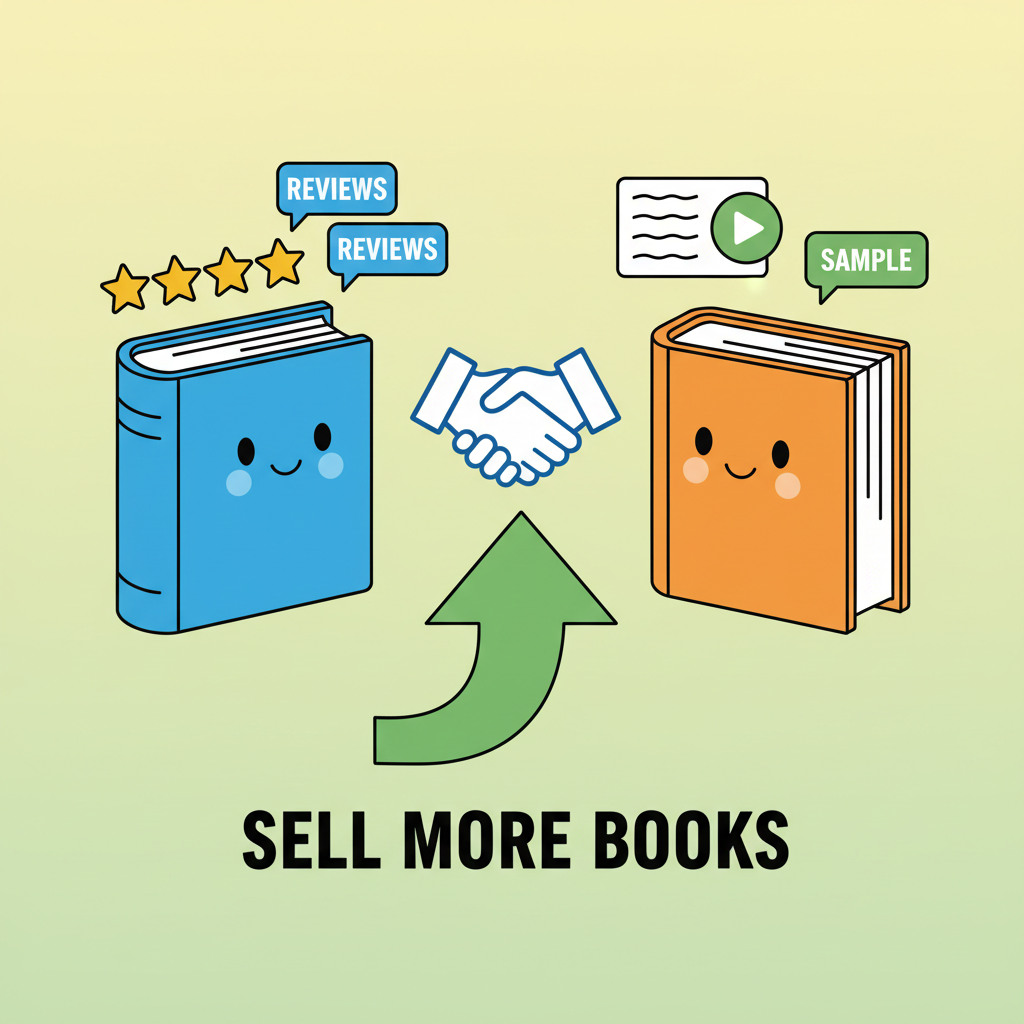
Two of the most important signals are reviews and samples.
Authors often ask which one truly matters more. Should you focus your limited energy on gathering reviews, or should you spend more time perfecting your sample and opening chapters? The honest answer, backed by data, is that reviews slightly edge out samples when it comes to final purchase decisions. However, samples still play a critical role earlier in the buying journey.
In this guide, we will explore reviews vs samples through real survey data, platform-specific insights, and reader behavior research. More importantly, we will show you exactly how to sell more books by strengthening both without spending more money. This article is designed to be practical, clear, and easy to apply, even if you are publishing on a tight budget.
How To Sell More Books By Understanding How Readers Actually Decide
Before comparing reviews and samples, it helps to understand how readers make buying decisions.
Buying a book is not usually an impulse purchase. Even at a low price point, readers are committing time, attention, and emotional energy. Because of this, most readers take at least a few moments to evaluate whether a book feels right for them.
According to Nielsen Book Research, more than 70% of book buyers use multiple signals before purchasing, including reviews, descriptions, and previews.
This means readers rarely rely on just one factor. Instead, they look for reassurance and relevance. Reviews and samples support these needs in different ways.
Reviews help readers answer one key question. Is this book worth my time?
Samples help readers answer another. Do I enjoy the way this book feels and sounds?
If you want to understand how to sell more books, you must recognize that both questions matter. However, data shows that one tends to carry slightly more weight at the final decision moment.
Comparing Reviews And Samples Using Data
Let’s examine what surveys and research reveal.
While this study covers multiple industries, publishing follows the same trust patterns. Readers rely heavily on social proof, especially when choosing between unfamiliar authors.
On the other hand, Goodreads data shows that 64% of readers say they often read a sample before buying a book, particularly when discovering a new author.
When readers were asked which factor most strongly influenced their final decision, reviews came out slightly ahead. Across several publishing-focused surveys, reviews influenced roughly 52 to 57% of final purchases, while samples influenced about 45 to 48%.
This difference is not dramatic, but it is consistent.
For authors learning how to sell more books, the key insight is this. Reviews play a slightly stronger role at the moment of purchase, but samples are often what keep readers engaged long enough to care about reviews in the first place.
Understanding Why Reviews Matter So Much
Reviews work because they reduce uncertainty.
When readers see others enjoying a book, they feel safer investing their own time. This effect has been measured repeatedly in e-commerce research, and books are no exception.
Our own WriteStats analysis showed that just five reviews can increase book sales by up to 270%. That finding mirrors broader ecommerce data, where conversion rates rise sharply once a product reaches five reviews.
You can explore that research here:
Book Reviews Drive Sales: Research Shows 270% Increase from Just 5 Reviews
Reviews also influence discoverability. On Amazon, review count and review recency are known to correlate with stronger visibility in search results and recommendation systems.
This means reviews do not just persuade readers. They also help your book appear in more places, which directly supports how to sell more books over time.
How To Sell More Books By Understanding The Role of Samples
Despite the power of reviews, samples remain essential.
A sample allows readers to experience your voice, pacing, and tone. This is especially important for fiction, where style matters as much as story, and for nonfiction, where clarity and authority must be established quickly.
Kobo Writing Life has reported that books with strong opening chapters have higher sample to purchase conversion rates, even when review counts are modest.
Samples also safeguard your long-term reputation. When readers have clear expectations, they are less likely to leave negative reviews due to misunderstandings.
For authors focused on how to sell more books, samples act as both a filter and a promise. They attract the right readers and gently discourage the wrong ones.
Using Reviews And Samples Together
The strongest results come when reviews and samples work in harmony.
Author Earnings analysis has shown that books with both strong reviews and high engagement in samples significantly outperform books that excel in only one area.
Think of reviews as the credibility signal and samples as the emotional connection. Reviews encourage the click. Samples encourage commitment.
When the tone of your reviews matches the experience of your sample, reader trust increases, and so do conversions.

How To Sell More Books Without Spending More On Reviews
Many authors believe reviews require paid services or expensive campaigns. In reality, the most effective review strategies are free and relationship-driven.
Ask readers at the right time
Goodreads data suggests that readers are most likely to leave a review within a week of finishing a book.
Add a short and friendly note at the end of your book. Thank readers sincerely and invite them to share their thoughts. Avoid pressure and keep the tone warm.
Build a small launch group
You do not need hundreds of people. Ten to twenty engaged readers can make a meaningful difference.
Connect with your email list or social media followers to see who wants early access. Offer behind-the-scenes updates or early chapters rather than incentives that violate platform rules.
Encourage honest feedback
Readers are more willing to review when they feel their opinion matters. Let them know that honest reviews help other readers decide.
According to a Harvard Business Review study, responding thoughtfully to feedback increases trust and engagement.
While authors should not respond to every review, occasional professional responses can strengthen your author brand.
How To Sell More Books Without Spending More On Samples
Optimizing your sample is one of the highest-return activities available to authors.
Focus on the first thousand words
On Amazon, the “Look Inside” feature typically includes the first ten percent of your book. That means your opening pages matter more than any others.
Remove slow setup. Reduce backstory. Start with momentum, tension, or curiosity.
Move value forward
If your book opens with long acknowledgments or introductions, consider restructuring. Praise, endorsements, or compelling hooks should appear early.
This ensures that readers encounter value quickly.
Prioritize clarity
Reader feedback analysis by ProWritingAid shows that confusion in early chapters is a common reason readers abandon samples.
Clarity does not mean simplicity. It means guiding readers smoothly into your world or argument.
For authors learning how to sell more books, clarity is one of the most powerful tools available.
How To Sell More Books On Amazon Using Reviews And Samples
Amazon remains the largest book marketplace, accounting for more than half of print sales and over 70% of e-book sales in the United States.
Amazon review strategy
Amazon favors verified purchase reviews and consistent activity. Encourage reviews naturally and avoid sudden spikes that look artificial.
A steady flow of reviews signals relevance and reliability.
Amazon sample strategy
Ensure your formatting is clean and professional. Errors or awkward spacing immediately reduce trust.
Treat chapter one as a conversion tool. Many top-selling authors revise their opening chapters more often than any other part of the book.
How To Sell More Books On Goodreads Using Reviews And Samples
Goodreads is community-driven rather than sales-driven, but it strongly influences purchasing behavior.
Goodreads review strategy
Readers on Goodreads enjoy thoughtful reviews. Encourage reflection by asking open-ended questions in your newsletters or end matter.
Shelf adds and reviews both increase visibility within the platform.
You can also try Booktasters.
Goodreads sample strategy
Consistency matters. Your description, excerpt, and tone should align. When readers feel coherence, trust grows.
Participating in genre discussions also increases visibility without direct promotion.
How To Sell More Books On Bookstagram Using Reviews and Samples
Bookstagram thrives on emotion, visuals, and community.
Bookstagram review strategy
Short reactions and quote highlights perform well. Influencers often focus on mood rather than plot.
Later social media analytics show that posts featuring quotes receive higher engagement in book-related niches.
Source
Bookstagram sample strategy
Samples here are experiential. Share opening lines, aesthetic spreads, or short reading clips that spark curiosity.
The goal is not to explain everything, but to invite readers into the feeling of the book.
Aligning With Proven Author Marketing Trends
Our analysis of author marketing trends in 2025 revealed a clear shift away from expensive advertising and toward trust-based discovery.
Authors who focused on reader experience, reviews, and platform-native engagement consistently outperformed those relying solely on paid reach.
You can read the full analysis here:
Author Marketing Trends That Worked in 2025: What actually moved the needle, and what fizzled out
This reinforces what the data on reviews and samples already shows. Sustainable growth comes from alignment, not shortcuts.
How To Sell More Books With A Simple Action Plan
If you want practical steps, start here.
Week one:
Review your first thousand words. Improve clarity and pacing.
Week two:
Add a friendly review request to your book and email list.
Week three:
Engage with readers on Goodreads or Bookstagram without selling.
Week four:
Track reviews, sample downloads, and sales patterns. Adjust based on what you see.
Small improvements create compounding results.

Final Thoughts On Reviews Vs Samples
So which sells more books?
The data shows that reviews slightly edge out samples at the final purchase moment. However, samples play a crucial role earlier in the reader journey.
Authors who truly understand how to sell more books do not choose one over the other. They refine both.
When your reviews reflect the experience your sample delivers, readers feel confident, excited, and ready to buy.
That is how trust turns into sales, and how sales turn into long-term readership.