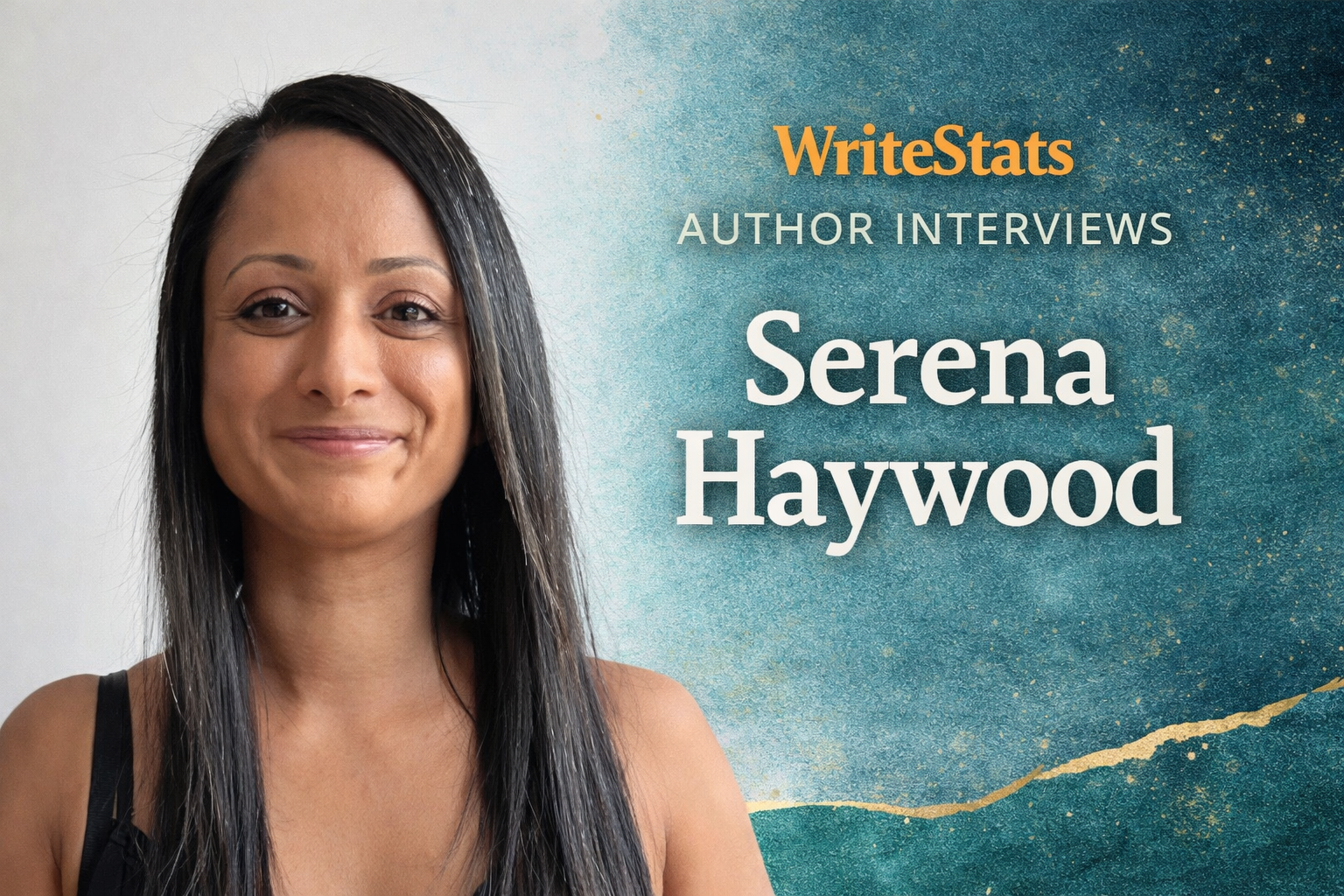
Serena Haywood is a London-based writer, psychology graduate, and digital content creator whose work sits at the intersection of storytelling, human behaviour, and emotional clarity. With three books published under her own name and ten more written under pen names, Haywood has quietly built a prolific writing career rooted in both creativity and insight.
Her recent work, including Dark Psychology & Manipulation and its accompanying journal, focuses on helping readers understand the behaviours that cause self-doubt and emotional confusion, without fear-based framing or sensationalism. Across fiction, nonfiction, and teaching, Serena Haywood’s work consistently returns to one core goal: helping people feel understood.
In this WriteStats Author Interview, Serena Haywood shares how her writing journey began, how psychology shapes her storytelling, and why discipline, structure, and emotional honesty matter more than inspiration alone.
Serena Haywood’s Writing Journey Began with Reading
For Serena Haywood, writing did not begin with publishing goals or market awareness. It began with reading.
“I started writing when I was eleven, filling notebooks with stories because it felt like the most natural way to express myself.”
However, the foundation was laid even earlier.
“I was an obsessive reader as a child. Books were my first teachers and the doorway into every world I wanted to create.”
That deep immersion in story shaped her relationship with writing long before she considered it a career. Even formal education came later.
“I’m completely self-taught, until I did my English Literature A-Level.”
What stands out is that writing never felt optional. It was instinctive.
“Writing grew from that love of storytelling and never really stopped.”
How Psychology and Human Behaviour Shape Her Work
One of the defining aspects of Serena Haywood’s writing is her focus on human behaviour. That focus is not accidental.
“I’m always fascinated by human behaviour, motives, secrets, tiny moments that reveal everything.”
Her academic background plays a major role here. With a Psychology degree and an Acting for Screen diploma, Haywood approaches storytelling as both observation and embodiment.
“Creatively, I’m influenced by theatre, film, and a lifetime of studying how people tell stories across mediums.”
As a result, her work is layered and character-driven, whether she is writing nonfiction guides or exploring darker psychological themes.
This aligns closely with what WriteStats research has shown about emotional engagement in storytelling. Readers connect more deeply to stories that reflect authentic emotional processes, something we explore further in Why Readers Cry, Laugh, and Re-Read: The Brain Science Behind Emotional Stories on WriteStats.
What Keeps Her Writing When It Gets Hard
Like most professional writers, she does not rely on inspiration alone.
Instead, she stays connected to purpose.
“Remembering the reader. There’s someone out there who needs the story I’m working on.”
That reader-centric mindset sustains her through difficult stretches.
“Writing is the one place where I feel completely myself. Even when it’s difficult, it’s still home.”
This sense of grounding is a recurring theme throughout her interview. Writing is not just output for Serena Haywood. It is identity.
A Practical and Structured Writing Process
Despite her creative depth, Serena Haywood keeps her tools simple.
“I keep it simple. I draft in Google Docs or Word, depending on the project.”
Structure becomes especially important when balancing multiple responsibilities.
“I’m a parent, I run multiple creative projects and I write across different genres, so managing my energy is key.”
To stay on track, she treats writing like a job.
“Scheduled sessions, deadlines and breaking big goals into small, achievable pieces.”
She also uses spreadsheets, Trello, Dropbox, Canva, and the full Amazon KDP toolkit, especially when deadlines are tight.
Importantly, her use of AI is deliberate and limited.
“I have started to use AI more recently only to support research, structure ideas, and speed up admin.”
The creative work itself remains human.
Why Serena Haywood Chose Indie Publishing and KDP
Haywood values speed, data, and creative control.
“I chose Amazon KDP because it gives authors full creative control and direct access to a global readership.”
She appreciates flexibility.
“I like being able to adjust covers, blurbs, keywords and pricing whenever I need to.”
This perspective reflects a broader industry shift. Increasingly, authors want control over their intellectual property and publishing timelines, especially when building sustainable careers.
A Collaborative Publisher Relationship That Still Respects Autonomy
Although Haywood identifies as an indie author, she publishes through Turtle Tree Press, and the experience has been positive.
“They give me a huge amount of creative freedom while also providing structure, support and professional guidance.”
That balance matters.
“It feels like a genuinely collaborative partnership.”
With a publishing budget of $150, Haywood demonstrates how lean publishing can still produce professional results when paired with experience and clarity.
Writing as a Business and a Creative Ecosystem
Serena Haywood considers herself a full-time author, but her income is diversified.
“Writing is a significant part of my income, but it’s also part of a wider creative ecosystem.”
She writes books, teaches other authors, and runs storytelling projects.
“Each area supports the others.”
This integrated approach reflects modern author careers more accurately than the outdated idea of a single income stream.
Serena Haywood’s Thoughts on AI and Creative Integrity
Serena holds a nuanced view on AI.
“I see AI as a supportive tool rather than a replacement for creativity.”
She is clear about boundaries.
“I don’t use it for editing. Other writers will always have a better perspective.”
For her, lived experience remains irreplaceable.
“Personal experiences help shape so much of it.”
This perspective reinforces the idea that emotional authenticity remains central to meaningful storytelling.
The Legacy Serena Haywood Wants to Leave
When asked about legacy, Serena Haywood focuses on emotional impact rather than metrics.
“I hope my books make people feel seen, inspired, or understood.”
She also thinks generationally.
“I’d love for my kids to create and write without fear or judgement.”
That emphasis on permission and courage defines her work.
What’s Next for Serena Haywood
After completing Dark Psychology & Manipulation, she stands at a creative crossroads.
“One is Stop Overthinking, a practical guide designed to help readers break mental spirals.”
The other is a graphic novel.
“Nebula, a darkly humorous journey through the afterlife.”
Different forms, same voice.
“Strong storytelling, emotional depth, and a focus on understanding human behaviour.”
Final Thoughts on Serena Haywood’s Author Journey
Serena Haywood’s career reflects what modern authorship truly looks like. It is structured yet creative. Strategic yet human. Grounded in discipline, but fueled by empathy.
Her journey reinforces one essential truth: meaningful writing comes from understanding people, including yourself.
And in a publishing landscape that increasingly rewards speed over substance, Serena Haywood reminds us that emotional clarity, integrity, and connection still matter.