If readers tell you they felt lost after finishing your book, struggled to start something new, or kept thinking about your characters days later, you did not just entertain them. You triggered book hangover psychology.
For authors, a book hangover is not an accident. It is the result of specific narrative, emotional, and neurological mechanisms working together. When you understand why readers miss fictional worlds so intensely, you gain powerful insight into how stories bond with the brain and how to write fiction that lingers.
This article dives deep into the neuroscience and psychology behind book hangovers, not to romanticize reader emotion, but to help you understand what actually causes it and how you can apply those principles intentionally in your own writing.
What Is a Book Hangover From an Author Perspective
A book hangover occurs when a reader finishes a deeply immersive story and experiences emotional and cognitive aftereffects that persist beyond the final page. From an author standpoint, this manifests as readers who:
- Replay scenes repeatedly in their minds
- Miss characters as if they were real people
- Feel emotionally displaced after the story ends
- Delay starting a new book because they are not ready to leave the world
- Experience nostalgia, longing, sadness, or emotional fullness tied to the story
This state is not random. It reflects how the brain processes immersive narrative as lived experience. When authors create strong book hangovers, they are effectively shaping memory, emotion, and attachment at a neurological level.
Understanding book hangover psychology helps authors see storytelling not only as entertainment, but as a form of emotional architecture.
Why the Brain Bonds With Fictional Worlds You Create
To understand how your writing creates lasting impact, you must understand what happens in the brain during immersive reading and what happens when that immersion ends.
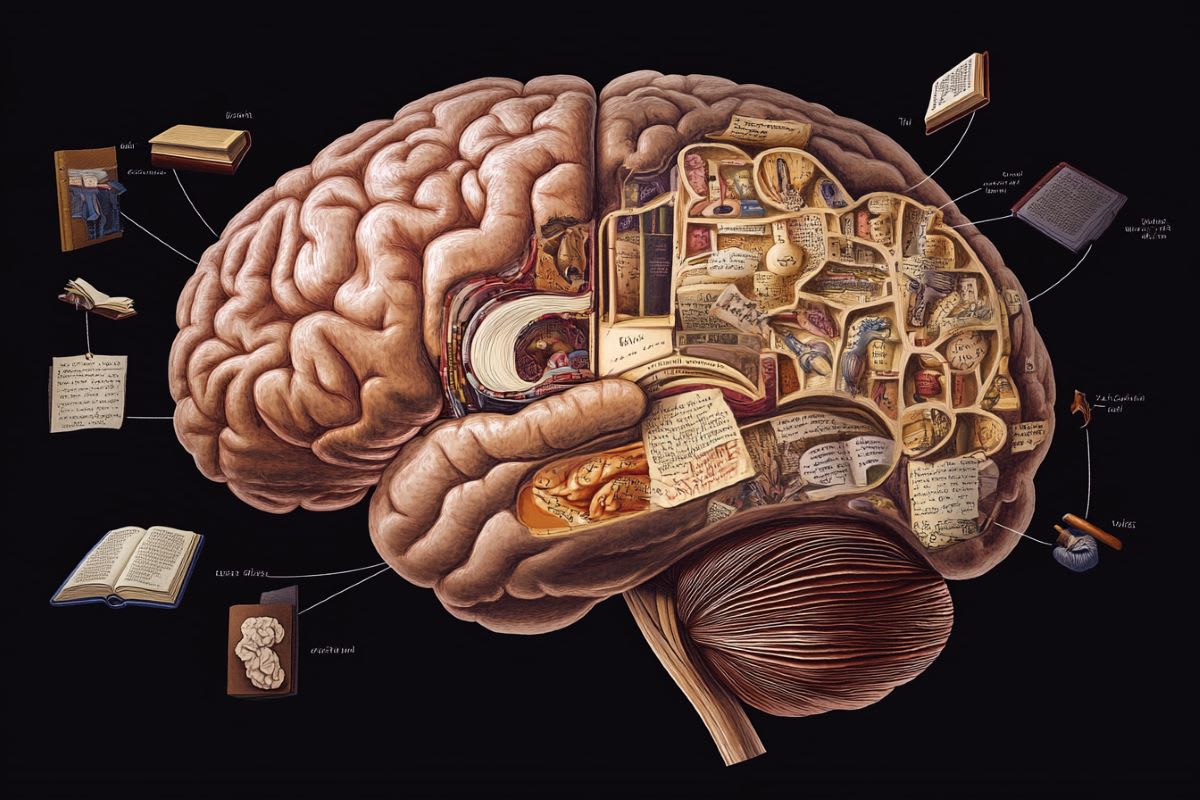
Research shows that reading activates multiple brain regions at the same time, including:
- The default mode network which governs imagination, self reflection, and memory
- The mirror neuron system which enables empathy and emotional simulation
- The prefrontal cortex which processes meaning and emotional evaluation
- The sensory cortex which responds to vivid description as if it were real sensory input
- The limbic system which governs emotion, attachment, and bonding
In practice, this means the reader’s brain does not treat your story as abstract fiction. It treats it as lived experience.
From a craft standpoint, this explains why readers miss fictional worlds you create. Their brains genuinely inhabited them.
What the Research Tells Authors About Narrative Immersion
Several foundational studies help explain why certain stories linger.
Neural coupling research from Princeton University found that when people listen to or read stories, their brain activity mirrors the events of the narrative as if they were physically experiencing them.
Cognitive Science research shows that reading activates up to seven neural networks simultaneously, including emotional and sensory systems that remain active even after reading stops.
Research from Emory University demonstrated that reading fiction can alter brain connectivity patterns for up to five days after finishing a novel.
For authors, this confirms a critical truth. Stories do not end when the book ends. If the narrative was immersive enough, the brain continues processing it well after the final page.
Why Readers Miss the Worlds You Build
Even though readers intellectually understand that fictional worlds are not real, the brain does not operate solely on logic. Emotion and imagination override that distinction when immersion is strong.
Here are the core psychological mechanisms authors should understand:
1. Readers Form Parasocial Bonds With Characters
Parasocial relationships are emotional attachments formed with people who are not physically present. These bonds are not limited to celebrities. They form powerfully with fictional characters.
A study published in Psychology of Aesthetics Creativity and the Arts found that readers form parasocial relationships with fictional characters at levels comparable to relationships formed with real world media figures.
For authors, this explains why readers:
- Feel protective of characters
- Grieve character deaths
- Celebrate character reunions
- Feel lonely when a story ends
This bond is neurological, not metaphorical. Strong character work creates genuine attachment, which directly contributes to book hangover psychology.
2. Emotional Contagion and Mirror Neurons in Storytelling
When your characters experience emotion, the reader’s brain partially experiences it too.
Research on mirror neurons shows that the same neural patterns activate when we observe an emotion as when we experience it ourselves.
This means:
- When a character grieves, the reader’s brain simulates grief
- When characters fall in love, hormonal responses are triggered
- When danger appears, cortisol levels rise
Crucially, these emotional simulations do not stop immediately when the book ends. Emotional momentum carries forward.
For authors, this highlights the importance of emotional authenticity. The brain cannot disengage cleanly from simulated emotion, which is why honest emotional arcs create stronger hangovers than shock driven drama.
3. Cognitive Residence and Living Inside Your World
Highly immersive fiction creates what psychologists call cognitive residence. This is the sensation that the reader is mentally living inside the story world even when not actively reading.
This phenomenon connects to research on mental simulation, imagination networks, spatial memory, and narrative transportation.
A study published in Narrative Impact found that highly transported readers experienced 33 percent stronger emotional effects after finishing a story compared to less transported readers.
For authors, this means world building is not just about description. It is about creating a place the reader’s brain accepts as a temporary home.
The stronger that sense of residence, the stronger the book hangover.
4. Dopamine Withdrawal After Emotional Peaks
Emotionally rich narratives stimulate dopamine release during moments such as:
- Plot twists
- Romantic tension
- Emotional revelations
- Climactic confrontations
- Moral victories
When the story ends, dopamine levels drop sharply. This creates what researchers describe as a reward comedown.
For authors, this explains why readers often feel restless or emotionally unsettled after finishing a powerful book. Their brains are adjusting to the sudden loss of emotional rhythm.
This biological shift is central to book hangover psychology and is one reason emotionally satisfying endings often still leave readers aching.
5. Long Term Memory Encoding Makes Fiction Feel Real
The hippocampus encodes emotionally significant narratives in long term memory using mechanisms similar to those used for personal experiences.
A study published in Memory and Cognition found that emotional narrative events are stored in memory in ways comparable to real life experiences.
For authors, this means your settings and worlds are not just imagined. They are stored.
Fictional places often live alongside real memories in the brain. This explains why readers feel nostalgia for worlds they never physically visited.
How World Building Influences Book Hangover Intensity
Not all worlds linger equally. Some fade quickly. Others follow readers for years.
Research in cognitive literary studies shows that the likelihood of lasting attachment increases with:
- World complexity
- Emotional stakes
- Cultural depth
- Sensory richness
- Social dynamics
- Character rooted interaction with the setting
For authors, this reinforces a key craft lesson. World building is most powerful when it is emotionally lived through characters, not described in isolation.
Why Seasonal Reading Intensifies Book Hangovers
Certain seasons amplify narrative immersion. Winter in particular increases emotional availability and focus.
Lower external stimulation leads readers to bond more deeply with fictional worlds. This seasonal effect heightens emotional resonance, atmospheric memory, and narrative transportation.
This is why long fantasies, cozy fiction, and emotionally rich novels often produce stronger hangovers when read during quieter seasons.
This is where our related blog comes in:
“Why Read Books Seasonally: The Magic of Winter Reading”
How Long Book Hangovers Typically Last
Based on narrative immersion research in psychology, authors can expect the following patterns:
- Light hangover lasting one to three days
- Moderate hangover lasting four to seven days
- Deep emotional hangover lasting two to four weeks
- Permanent emotional imprint lasting years
Since neural connectivity changes can persist for up to five days, these timelines align closely with what neuroscience predicts.
Why Books Create Stronger Hangovers Than Film or Television
Reading activates more neural pathways than passive media.
A study published in Brain Connectivity found that reading engages over twenty percent more neural pathways than watching visual media.
This happens because reading requires active imagination. The reader constructs the world internally rather than receiving it passively.
For authors, this means the reader is not just observing your world. They are building it inside their own mind.
Emotional Resonance Is the Real Goal
Affective neuroscience shows that emotional traces remain active in the brain long after the stimulus is gone.
This explains why:
- Love stories linger
- Sacrifices echo
- Worlds feel missed
For authors, emotional resonance is the true driver of lasting impact in book hangover psychology. Plot may entertain, but resonance is what creates attachment.
Why Book Hangovers Are a Gift for Authors
A book hangover means the reader’s brain lived in your story.
- It means characters felt real.
- It means emotion landed honestly.
- It means imagination expanded.
Understanding book hangover psychology confirms what great authors intuitively know. Stories matter because they shape emotional experience.
When readers cannot let go, it is not because the story failed to provide closure. It is because it succeeded in becoming meaningful.
And that is not something to avoid.
That is something to write toward.